
so, who are you?
Helping people connect better with themselves and who they are is my greatest passion. As someone with their own experiences with neurodivergence and complex trauma, I know firsthand how hard it can be to navigate the world when your pain is invisible to everyone else. As a therapist with a psychodynamic lens, I believe in helping you uncover the deeper, often unconscious, patterns that are at play within your relationships, both with yourself and with others. I love working with individuals who are insightful and looking to do the deeper work.
For over a decade, I’ve worked alongside adults and families as they navigate what it means to be who they are. My background includes work in the child welfare sector, infant mental health therapy, working with high-behavioral needs children who were prenatally exposed to substances, and providing individual therapy for adults with complex trauma and those who identify as neurodivergent (Autism Spectrum Disorder, ADHD, etc.). In my private practice, my therapeutic work centers on attachment, emotional regulation, and trauma healing. Additionally, I have experience working on a multi-disciplinary team and love providing education to parents and late-diagnosed neurodivergent adults on how sensory systems and executive functioning play a role in how we exist in the world.
Contrary to how our experiences can break us down, I do not believe that people need to be “fixed”. The truth is that many of us grow up without knowing how it feels to be unconditionally loved and accepted as we are, especially the parts of us that we deem make us unworthy or unloveable. Many of us have inherited the darkness and pain of our ancestors, including our parents or tribe/community. I believe in the power of healing in a safe relationship where we can speak honestly about what’s hard, what’s not working, and where I can help show you a path that doesn’t require you sacrificing parts of yourself to be loved or accepted!
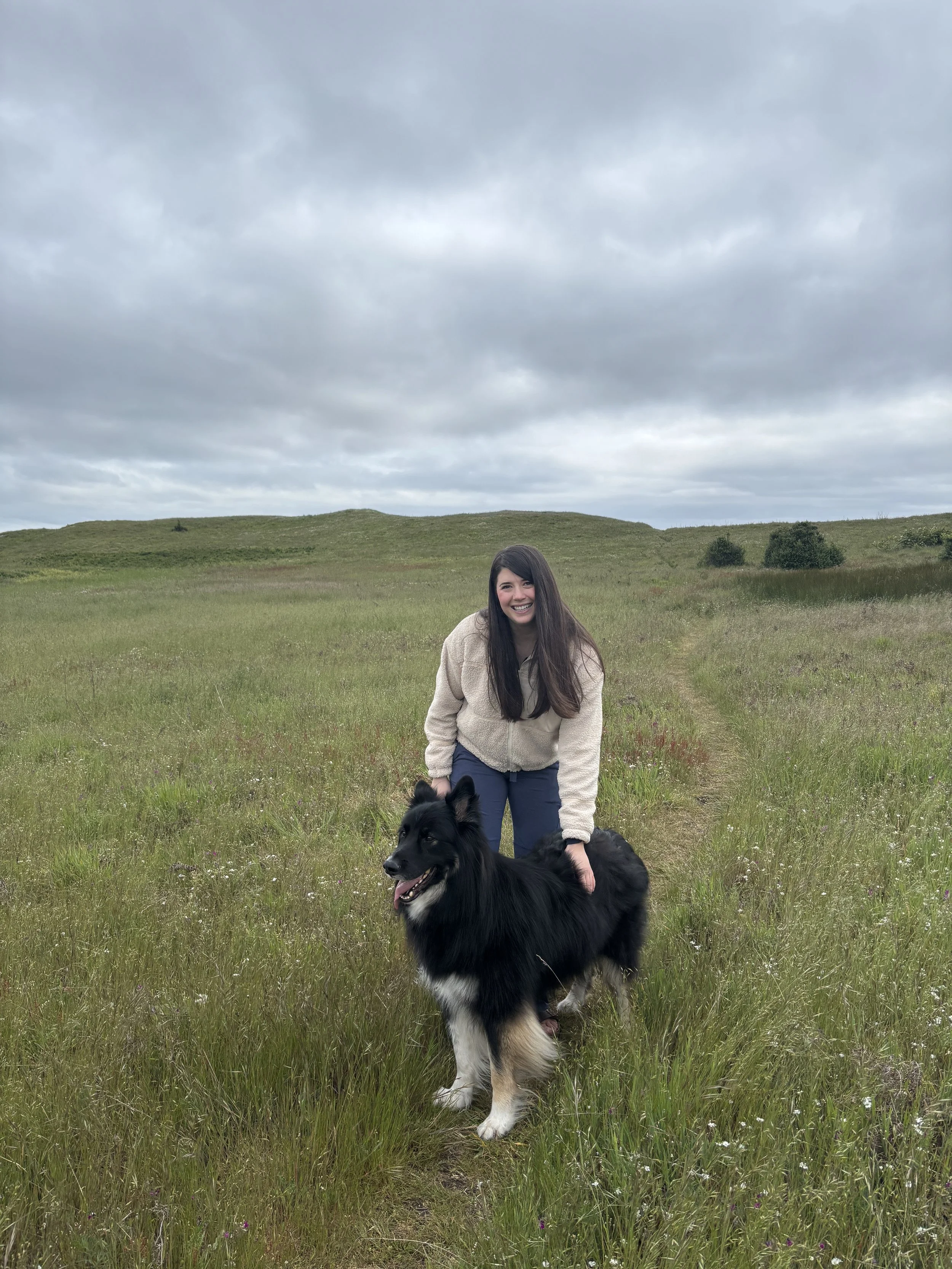
Outside of being a therapist, I love drawing, making a mess in the kitchen, and going on hikes with my husband and my German Shepherd/Husky, Kona. I also enjoy gardening, playing music, hiking in the mountains, and reading both fiction and non-fiction. I am a proud member of the Wyandotte Nation, Mudeater clan, and have had my own struggles navigating cross-cultural lines.
My Approach
My therapeutic approach is primarily relational and psychodynamic. I draw on principles from Internal Family Systems, Child Parent Psychotherapy, Emotionally-Focused Therapy, and somatic interventions. I am genuinely invested in the people that I work with and feel it’s an honor to be the recipient of someone’s story. I’m interested in getting to know you, how you came to be where you are, and the parts of you that maybe you don’t fully understand yet. I am not the type of therapist to just respond, “And how does that make you feel?” because for many of us, we might not know how it makes us feel. Trauma disconnects us from our body and our internal knowing. I believe in the power of the mind-body connection and believe we receive crucial information about how we feel from our bodies, if we know how to listen to it.
As an Indigenous practitioner, I take an anti-colonial approach to therapy and healing; this looks like actively naming power dynamics, acknowledging the legitimacy of ancestral rage and spirit-work, and prioritizing your culture and voice as desired by you in our sessions.
Education & Training
➜ Master’s in Social Work (MSW): University of Kentucky, 2023
➜ Bachelor’s in Applied Mathematics: Cal Poly Humboldt State University, 2016
➜ Licensed Social Worker Independent Clinical Associate (LSWAIC), WA, S.C. 61513168
➜ Child Parent Psychotherapy: UW Department of Nursing, 2024
➜ Play Therapy Training: APT Certified by Evergreen Play Therapy, 2024
➜ Indigenous Perinatal Mental Health: Perinatal Support Washington, 2024
➜ Certified PEERS® for Preschoolers Facilitator, 2026
➜ Complex Trauma Certification Training Levels 1 & 2 (CCTP/ CCTP-2), in progress, 2026

“Loneliness is a sign you are in desperate need of yourself.”
I often work with:Complex PTSD
Neurodivergence (Autism Spectrum Disorder, ADHD, OCD, AuDHD, etc.)
Couples experiencing high-conflict
Teens navigating perfectionism, divorce, or self-harm struggles
Borderline Personality Disorder/Bipolar Disorder
Parents with their own trauma histories
Survivors of emotionally absent or abusive parents
Common Questions
-
Confusion behind what qualifies as trauma or complex trauma is really common. We often think of trauma as one really horrible thing that happened, including violence, death of a caregiver or sibling, or experiencing physical abuse. While these events certainly can be traumatic, trauma extends beyond a single main event.
Complex trauma is the systematic, chronic and repeated exposure to emotional or physical pain, typically starting in our early years. This can look like being emotionally neglected, witnessing violent or intense conflict, food deprivation, poverty, bullying, being raised by a narcissistic parent, constant moving, parental substance abuse, and more.
People with complex trauma often have one or more of the following beliefs about themselves:
I am “too much” or “not enough” for people.
I am constantly being abandoned and left behind.
I am defective and unworthy; it’s just how I am.
It’s my fault that this happened to me; my parents couldn’t help it and I was the problem.
There’s no point to feeling upset about this; I can’t do anything about it.
I’ve tried everything to “fix me”, but nothing is working. I’m broken.
I constantly have to take care of other people. Why can’t someone else do the work for once?
The truth is it’s not about what’s wrong with you, but what happened to you. People with C-PTSD often struggle with dissociation, emotional regulation, suicidal ideation, high-conflict in romantic relationships, low self-esteem, shame, fawning to avoid conflict, or hyper vigilance in social settings. However, this list is not exhaustive.
If you think you may have C-PTSD and want to discuss this more, reach out for my free 20-minute phone consultation and we can talk about what healing can look like.
-
Relational therapy emphasizes the importance of mutually beneficial relationships and the importance of the client-therapist relationship in the context of healing. Put simply, we heal in the context of relationships, especially when our wounds are “relationally based” (abandonment, betrayal, parental abuse, etc.).
If we don’t feel safe or seen by someone, we’re unlikely to take off our armor and show who we really are, especially the parts of ourselves that we deem make us “bad” or “unworthy”.
-
I believe in being fully transparent and honest about my scope as a therapist. I want to ensure that whoever you are, you find the best fit for you and acknowledge that I may not be the best fit for you if you are:
struggling with addiction to narcotics
need religion to be the focus of your therapy
involuntary requirements
individuals in active psychosis
-
One of the biggest questions I’ve been asked is if their teenager has to want to come to therapy. The answer to this is complex, but ultimately, yes.
Washington State’s law of consent is 13 years old, meaning any child older than 13 is entitled to make consent decisions about treatment, entitled to confidentiality (including from parents), and make active decisions regarding their care.
That being said, there are times when they may not want to come to therapy. There are even times I don’t feel like going to therapy! However, this would be considered more of a context-dependent issue. Maybe we’re starting to tackle issues that trigger a child’s avoidance, or maybe they’re exhausted already from school and other demands.
Ultimately, I can determine relatively quickly if a teenager is being forced to engage in therapy. For all ages, treatment only works when we’re bought in to the process. Resistance is natural and expected. However, forcing a child to engage in this work before they’re ready can oftentimes cause more harm and dissuade them from seeking therapy in the future.
If you have questions regarding this, please feel free to reach out to me to discuss further!
-
Neurodivergence is a non-medical umbrella term to refer to people who’s brain operates differently from those deemed neurotypical. This can include children and adults who are on the Autism spectrum, ADHD, dyslexia, learning disabilities, complex trauma, prenatal substance exposure, and more.
Children with neurodivergence often need additional support than what their neurotypical peers need. Behaviors that result from chronic frustration or sensory overwhelm, including severe tantrums, physical aggression, and boundary refusal can be difficult to understand as a parent. Is my child intentionally disobeying me? I know they know the rules, so why aren’t they following them? Why can’t they just “get it”?
As someone with extensive training in working with neurodivergent children and their parents, I truly believe that with the power of psychoeducation, attachment work, and neurobehavioral therapy interventions, profound change can occur.
In my practice, I am passionate about practicing from a neuro-affirming model, finding strengths in your child as well as your parenting.