about the therapist
For over a decade, I’ve worked alongside adults and families as they navigate what it means to be who they are. My background includes work in the child welfare sector, working with high-behavioral needs children with prenatal substance exposure, and providing individual therapy for children & adults with complex trauma and those who identify as neurodivergent (Autism Spectrum Disorder, ADHD, etc.). In my private practice, my therapeutic work centers on attachment, emotional regulation, and helping individuals live more authentically to who they are. Additionally, I have experience working on a multi-disciplinary team and love providing education to parents and late-diagnosed neurodivergent adults on how sensory systems and executive functioning play a role in how we exist in the world.
Contrary to how our experiences can break us down, I do not believe that people need to be “fixed”. The truth is that many of us grow up without knowing how it feels to be unconditionally loved and accepted as we are, especially the parts of us that we deem make us unworthy or unloveable. Many of us have inherited the darkness and pain of our ancestors, including our parents or tribe/community. I believe in the power of healing in a safe relationship where we can speak honestly about what’s hard, what’s not working, and where we can find a path that doesn’t require you sacrificing parts of yourself to be loved or accepted.
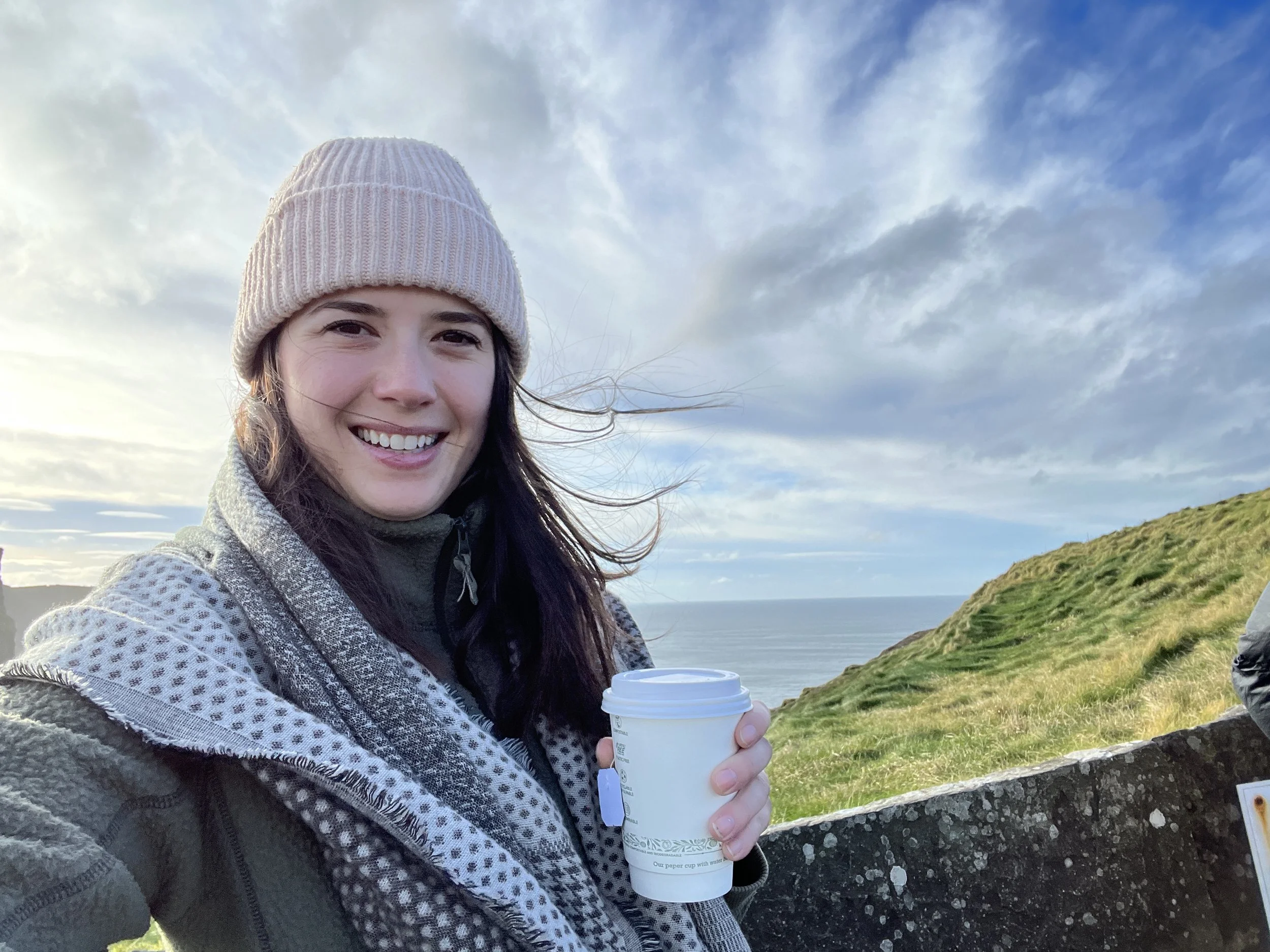
Outside of being a therapist, I love drawing, making a mess in the kitchen, and going on hikes with my husband and my German Shepherd/Husky, Kona. I also enjoy gardening, playing music, hiking in the mountains, and reading both fiction and non-fiction. I am a proud member of the Wyandotte Nation and have had my own struggles navigating my Whiteness in conjunction with my Indigenous ancestry.
-
➜ Master’s in Social Work (MSW): University of Kentucky, 2023
➜ Bachelor’s in Applied Mathematics: Cal Poly Humboldt State University, 2016
➜ Licensed Social Worker Independent Clinical Associate (LSWAIC), WA, S.C. 61513168
➜ Child Parent Psychotherapy: UW Department of Nursing, 2024
➜ Play Therapy Training: APT Certified by Evergreen Play Therapy, 2024
➜ Indigenous Perinatal Mental Health: Perinatal Support Washington, 2024
➜ Certified PEERS® for Preschoolers Facilitator, 2026
➜ Complex Trauma Certification Training Levels 1 & 2 (CCTP/ CCTP-2), in progress, 2026
-
My therapeutic approach is primarily relational and psychodynamic. I draw on principles from Internal Family Systems (IFS), Dialectical Behavior Therapy (DBT), Child Parent Psychotherapy (CPP), Emotionally-Focused Therapy (EFT), and somatic interventions to support our work together. I am genuinely invested in the people that I work with and feel it’s an honor to be the recipient of someone’s story.
However, I tend to treat sessions from a less clinical approach. I believe therapy is a relationship with another person and one I take seriously. I come to sessions as a genuine person, often with a dash of dark humor and bluntness. I am not the type of therapist to just respond, “And how does that make you feel?” because for many of us, we might not know how it makes us feel. Trauma disconnects us from our body and our internal knowing. I believe in the power of the mind-body connection and believe we receive crucial information about how we feel from our bodies, if we know how to listen to it.
As an Indigenous practitioner, I take an anti-colonial approach to therapy and healing; this looks like actively naming power dynamics, acknowledging the legitimacy of ancestral rage and spirit-work, and prioritizing your culture and voice as desired by you in our sessions.

“Loneliness is a sign you are in desperate need of yourself.”
I often work with:Complex PTSD/complex trauma
Neurodivergence (Autism Spectrum Disorder, ADHD, OCD, AuDHD, etc.)
Individuals looking to “feel their feelings” and feel more connected to themselves
Teens navigating perfectionism, divorce, or self-harm struggles
Parents with their own trauma histories
Indigenous/First Nations peoples
Survivors of emotionally absent or abusive parents
Common Questions
-
Confusion behind what qualifies as trauma or complex trauma is really common. We often think of trauma as one really horrible thing that happened, including violence, death of a caregiver or sibling, or experiencing physical abuse. While these events certainly can be traumatic, trauma extends beyond a single main event.
Complex trauma is the systematic, chronic and repeated exposure to emotional or physical pain, typically starting in our early years. This can look like being emotionally neglected, witnessing violent or intense conflict, food deprivation, poverty, bullying, being raised by a narcissistic parent, constant moving, parental substance abuse, and more.
People with complex trauma often have one or more of the following beliefs about themselves:
I am “too much” or “not enough” for people.
I am constantly being abandoned and left behind.
I am defective and unworthy; it’s just how I am.
It’s my fault that this happened to me; my parents couldn’t help it and I was the problem.
There’s no point to feeling upset about this; I can’t do anything about it.
I’ve tried everything to “fix me”, but nothing is working. I’m broken.
I constantly have to take care of other people. Why can’t someone else do the work for once?
The truth is it’s not about what’s wrong with you, but what happened to you. People with C-PTSD often struggle with dissociation, emotional regulation, suicidal ideation, high-conflict in romantic relationships, low self-esteem, shame, fawning to avoid conflict, or hyper vigilance in social settings. However, this list is not exhaustive.
If you think you may have C-PTSD and want to discuss this more, reach out for my free 20-minute phone consultation and we can talk about what healing can look like.
-
Relational therapy emphasizes the importance of mutually beneficial relationships and the importance of the client-therapist relationship in the context of healing. Put simply, we heal in the context of relationships, especially when our wounds are “relationally based” (abandonment, betrayal, parental abuse, etc.).
If we don’t feel safe or seen by someone, we’re unlikely to take off our armor and show who we really are, especially the parts of ourselves that we deem make us “bad” or “unworthy”.
-
Ah! One of the most important questions, and simultaneously the hardest to answer. It truly depends on so many factors, including:
Your willingness to engage in the deeper work
Trauma history
Level of severity of symptoms
Social supports in place
Economic and housing stability
Goals and expectations
Consistency
The list goes on and on!
Some people seek therapy for a specific, more easily to pin-point issue that can be resolved in a matter of a few weeks or months. For others, this work can take significantly longer, especially if we are struggling in survival mode, limited in our access to means to support ourselves, or simply having lived a life that means therapy will always be a life-long support.
-
Our first session will consist of me explaining policies and procedures, introducing each other, and creating a space where I can get to know you better and learn more of what brings you to therapy. I see therapy as a relationship and prioritize getting to better understand your experience, what your hopes and goals are, and how I can best support you.
-
I believe in being fully transparent and honest about my scope as a therapist. I want to ensure that whoever you are, you find the best fit for you and acknowledge that I may not be the best fit for you if you are:
struggling with addiction to narcotics
need religion to be the focus of your therapy
involuntary requirements
individuals in active psychosis
unwillingness, inability, or lack of interest in doing the deeper work
-
I am currently accepting adult clients only and have a waitlist for adolescent telehealth and in-home therapy. New open availability should begin as of: October 2026.
Please feel free to contact me if you have any questions or are interested in working together!